Homeowner Tips
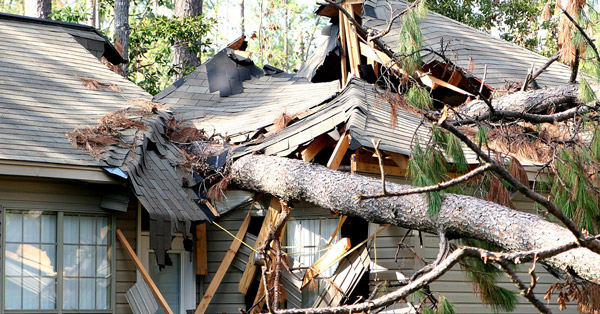
Every homeowner performs the same inspection after a storm. You walk into the driveway, look up, scan for missing shingles, and reach a verdict in about eight seconds: looks fine.
That verdict feels trustworthy because it’s built on a rule that serves us well almost everywhere else in life — if something were seriously wrong, I’d be able to see it. But roofs break that rule. Most roof damage in Houston isn’t dramatic. It doesn’t tear shingles off and throw them across the lawn. It lifts, bruises, cracks, and loosens things in ways that are invisible from thirty feet below — and then it waits. The gap between “damage occurred” and “homeowner finds out” is usually measured in months, and it closes the day a water stain appears on your ceiling.
By then, two expensive things have happened. The damage has spread from the roof surface into decking and insulation. And your window to document it as storm damage for an insurance claim has gotten harder to prove.
So here’s what’s actually worth knowing: the seven forms of damage that hide from a driveway inspection, why each one matters, and which ones you can check without ever climbing a ladder.
This is the most deceptive item on the list, and the reason “looks fine” fails so often. High winds don’t need to remove a shingle to ruin it. A strong gust lifts the shingle, breaks the adhesive seal underneath, and then lays it back down in almost exactly the same position.
From the ground: nothing. From the roof: a shingle that is no longer attached the way it was engineered to be. The next storm doesn’t have to break the seal — it’s already broken. That’s when shingles start disappearing, usually in patches, usually during the worst weather of the year, which is precisely when every roofer in Houston is booked three weeks out.
Hail rarely punches visible holes in asphalt shingles. What it does instead is subtler: the impact crushes the granule layer and fractures the fiberglass mat underneath, leaving a soft, dark “bruise” about the size of the hailstone.
The shingle doesn’t leak that day. But the bruise is now the weakest point on your roof — UV exposure and heat cycles work on it every day until it becomes a crack, and the crack becomes a leak. Bruising is also the single most important thing an insurance adjuster looks for after a hail event, which is why documenting it soon after the storm matters. A fresh bruise reads clearly as hail damage. The same spot two years later reads as “wear,” and wear is not covered.
Walk through your home and count the plumbing fixtures — every one of them vents through your roof, and every vent pipe is sealed by a rubber or neoprene boot. Those boots are frequently the shortest-lived component on the entire roof. Houston’s UV intensity and heat dry them out, and they split years before the shingles around them wear out.
A cracked boot is a small, cheap repair and a disproportionately common source of leaks — water follows the pipe straight down into walls and ceilings. It’s the classic case of a $150 problem becoming a $3,000 one, purely because nobody could see it from the ground.
Flashing — the metal that seals the joints where your roof meets chimneys, walls, and valleys — fails quietly. It rusts, lifts at the edges, or separates from the surface it’s sealed against, often by fractions of an inch. Those joints are exactly where water concentrates and flows during heavy rain, which means the smallest failures on your roof sit precisely at the points of highest water traffic. From the driveway, flashing problems are essentially undetectable; even from the roof, they take a trained eye.
Here’s one you can check from the ground — and it’s the closest thing your roof has to a fuel gauge. Those sandy granules embedded in your shingles aren’t decorative; they’re the armor that protects the asphalt underneath from UV radiation. When they wash off, they end up in your gutters and at the mouths of your downspouts.
Some granule loss is normal, especially on a new roof. What matters is change: a sudden increase after a hail storm, or a steady accumulation on an aging roof, means the armor is coming off and the shingles beneath are aging fast. Next time it rains, glance at what washes out of your downspouts. It’s a thirty-second habit that has flagged more failing roofs than any other homeowner check.
Houston’s heat cycles cause roofing nails to gradually work upward — “nail pops” — lifting small tents in the shingles above them and opening pathways for wind and water. Similarly, wind-creased shingles carry a faint horizontal line where the mat folded and fractured, even though the shingle still lies flat. Both are functionally invisible from the ground and both mean the same thing: the fastening system that holds your roof together is loosening. (It’s also why we hand-nail every shingle rather than gun-nailing — placement and depth are the difference between a fastener that holds for decades and one that backs out.)
The last place to look isn’t on the roof at all. On a bright day, turn off the attic light and look up: any pinpoints of daylight are holes. Then use a flashlight to scan the underside of the decking for dark staining, damp insulation, or a musty smell. Your attic is where hidden roof damage makes its first confession — often months before a stain ever reaches a ceiling you actually look at.
Here’s an honest decision rule, because “get an inspection after every rain” would be self-serving nonsense:
Get an inspection if any of these are true: hail fell in your area (any size — bruising doesn’t require golf balls), sustained winds exceeded roughly 50 mph, you can see granule accumulation or any of the attic signs above, your roof is more than 10 years old and hasn’t been inspected since installation, or your neighbors are getting roofs replaced — adjusters approved those claims from the same storms that hit your house.
The asymmetry is what makes this decision easy. An inspection from a reputable local company is free and costs you twenty minutes. Skipping it risks interior water damage and a missed insurance claim — storm damage documented promptly is your insurer’s expense; the same damage discovered two years later is yours.
At Buildercraft Roofing, our inspections are genuinely free, and the report is yours either way — including when the answer is “your roof is fine.” A no-pressure roof inspection with photos of what we find, whether that’s damage worth claiming or peace of mind worth having.
Storm come through recently? Call (346) 855-2064 or claim your free inspection. We serve Katy, Sugar Land, The Woodlands, Cypress, and communities across greater Houston.